
Film grammar
Shot types, angles and moves. Explained for people who prompt.
Every term with a plain definition, when directors use it, how to write it so a video model gets it right - and real examples from the library.
Shot sizes · 7
 Extreme Wide ShotThe subject is tiny or absent; the environment is the story.
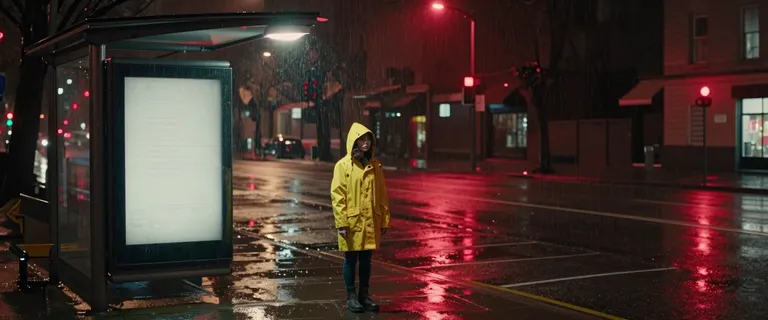 Wide ShotFull environment with the subject clearly readable inside it.
 Full ShotHead to toe, the body fills the frame height.
 Medium ShotWaist up; the default for dialogue and action you need to understand.
 Medium Close-UpChest up; intimate but still shows hands and shoulders.
 Close-UpThe face fills the frame; emotion becomes the subject.
 Extreme Close-UpA detail: eyes, hands, a drop of liquid.
 Low Angle Shot
 High Angle Shot
 Overhead Shot
 Eye Level Shot
Camera movements · 15
 Push-InThe camera moves slowly toward the subject; tension or realisation builds.
 Dolly InCamera on tracks moving toward the subject.
 Dolly OutThe camera retreats; reveal, isolation or ending.
 Tracking ShotThe camera travels alongside a moving subject.
 Orbit ShotThe camera circles the subject; a moment frozen in time.
 Handheld CameraOperator-held, organic shake: urgency, realism, documentary.
 Steadicam ShotFloating, stabilised movement that follows or leads a character.
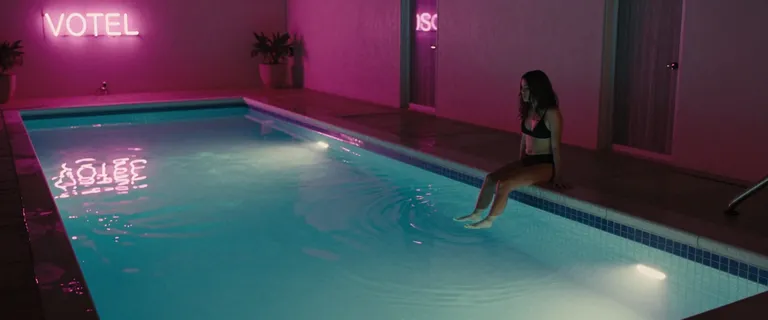 Crane ShotVertical sweep up or down; scale and grandeur.
 Drone ShotAerial movement: flyovers, reveals, pull-backs.
 Static ShotLocked-off camera; the frame is a stage.
 Pan and TiltThe camera rotates in place: horizontally (pan) or vertically (tilt).
 Dolly ZoomDolly and zoom in opposite directions: the background warps, the subject stays.
 Whip PanA very fast horizontal pan that smears the frame into blur, used to jump the eye from one subject to another.
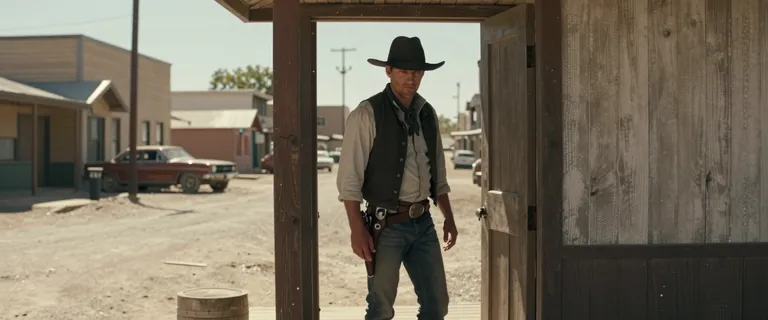 Crash ZoomA very fast zoom that snaps from a wide shot to a tight close-up with no easing, so the change feels sudden.
 Rack FocusA focus change that moves the sharp plane from one subject to another within a single continuous shot.
Lighting · 6
 Low-Key LightingMostly shadow, a few hard pools of light.
 BacklightingLight from behind the subject: rim, halo, silhouette.
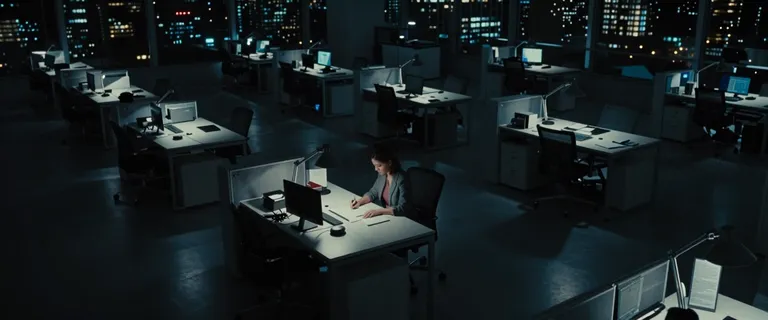 Practical LightingLight sources visible in the frame: lamps, screens, candles, neon.
 Golden HourLow warm sun just after sunrise or before sunset.
 Blue HourTwilight: deep blue sky, warm practical lights.
 Neon LightingSaturated magenta, cyan and red from signs and screens.