
Film grammar / Shot sizes
Wide Shot
Full environment with the subject clearly readable inside it.

What it is
A wide shot (WS, sometimes "long shot") shows the whole subject plus a generous amount of the space around them. The audience reads body language and location at the same time.
When to use it
It is the workhorse of blocking: two people at a table, a runner on a track, a car in a street. Most scenes cut back to a wide to re-orient the viewer after a run of close-ups.
How to prompt it
State the subject position ("standing on the left third", "walking toward camera") because in wide shots the model has more freedom to wander. Add the lens: 24-35mm keeps it natural.
Wide shot, a young woman in a yellow raincoat waiting alone at a glass bus stop at night, rain, red traffic lights reflecting on wet asphalt, slow push-in, 35mm lens.
43 examples in the library
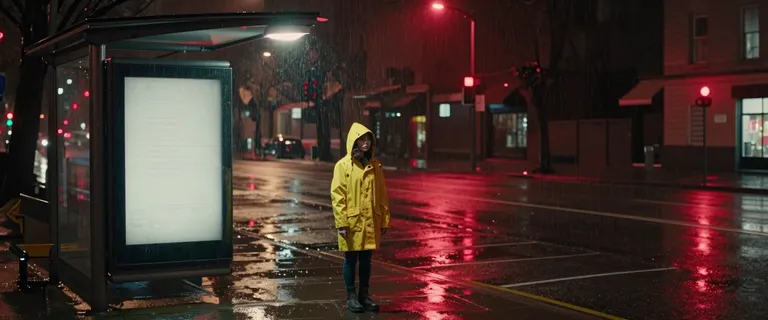
Night Bus Stop
slow push-inwide

Rooftop Dawn
drone pull-backwide

Inside the Barrel
trackingwide

Harvest Light
trackingwide

Rehearsal
slow dolly-leftwide

Spice Market
steadicam followwide

Waiting
staticwide
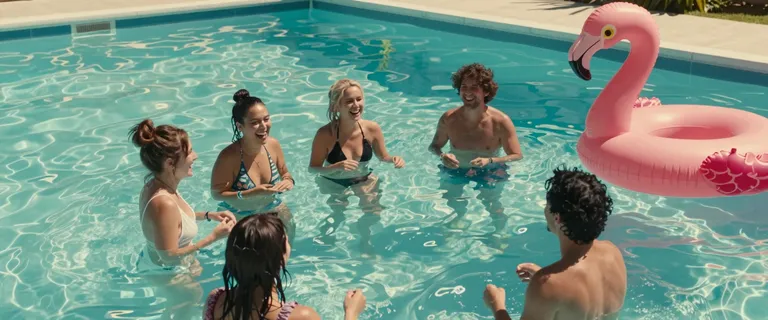
Poolside
staticwide

Keeper
staticwide