
Film grammar / Shot sizes
Extreme Wide Shot
The subject is tiny or absent; the environment is the story.

What it is
An extreme wide shot (EWS) places the camera so far back that people become specks against landscape, architecture or weather. It establishes geography, scale and isolation in a single frame.
When to use it
Use it to open a sequence, to show how small a character is against the world, or to let a location breathe before cutting closer. Long lenses flatten the distance and make the horizon feel oppressive; ultra-wide lenses exaggerate depth and make the sky feel enormous.
How to prompt it
Video models tend to zoom in on the subject by default. Say "extreme wide shot" at the start of the prompt and describe the subject as "a tiny figure" or "a small silhouette" so the model keeps the scale.
Extreme wide shot, a tiny lone rider crossing a vast cracked salt flat, heat haze on the horizon, slow pan, 135mm lens, hard midday sun, bleached warm grade.
16 examples in the library

Lone Rider
slow panextreme-wide

Summit
drone orbitextreme-wide

Storm Coming
staticextreme-wide
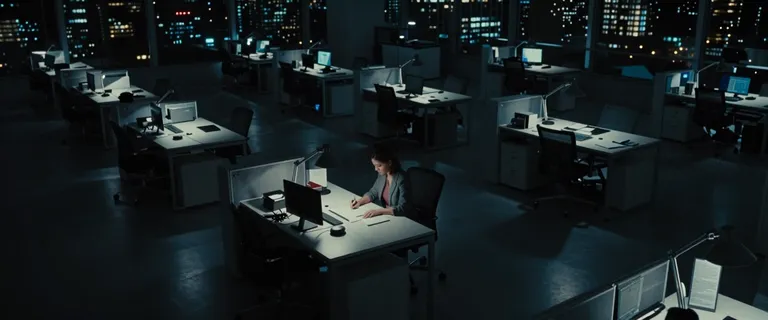
After Hours
staticextreme-wide

Hangar Nine
slow crane-upextreme-wide

Still Water
staticextreme-wide

Dead Mall
slow push-inextreme-wide

Wreck
slow tilt-upextreme-wide

Caldera
drone push-inextreme-wide