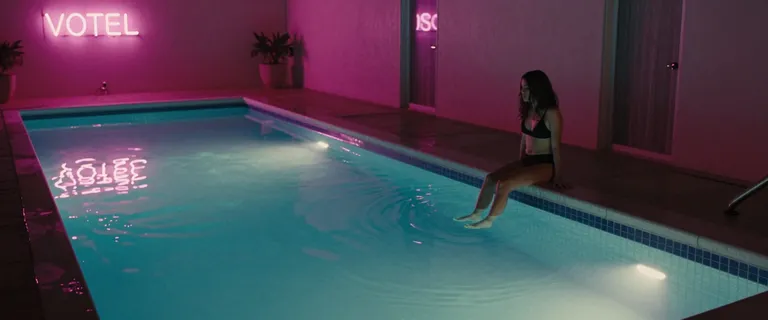
Crane Down
Camera lowers vertically on a crane, dropping from a high position toward the subject or the ground.

What it is
A crane down is a move where the camera descends in a smooth vertical arc, usually from above eye level to a lower position. Because the arm moves the camera up and down rather than sideways, the height and framing change together. The viewer moves from an overview into the scene, and the subject often becomes more intimate as the frame closes in. Done slowly, the move feels deliberate and a little heavy.
When to use it
A director picks a crane down to end a wide establishing shot and settle into a character, or to show a setting first and then bring attention to a person within it. It suits moments of reflection, where the downward motion can mirror a feeling of sinking or stillness. It is also used to reveal a place from above before landing on a detail. A fast version feels dramatic, while a slow one feels quiet.
How to prompt it
Name the move directly, such as "slow crane down" or "camera descends on a crane arm," and state the start height and end framing, for example starting high and ending at the subject's shoulders. Video models such as Seedance, Kling, Veo, Sora, Runway and Wan respond better when the motion has a clear start and end. Keep the speed word slow so the model does not add a rushed drop.