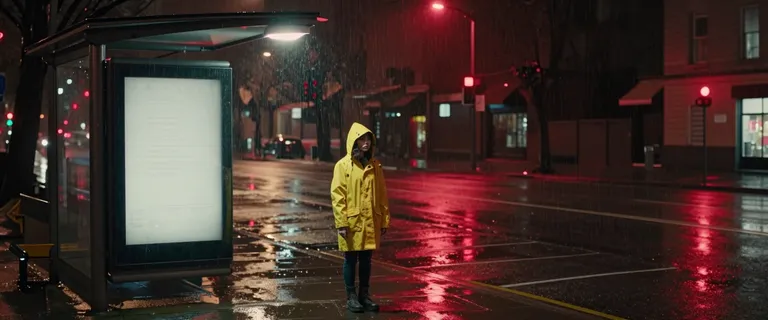
Wide-Angle Lens
A lens with a wide field of view that fits more of the scene in frame and exaggerates depth.
What it is
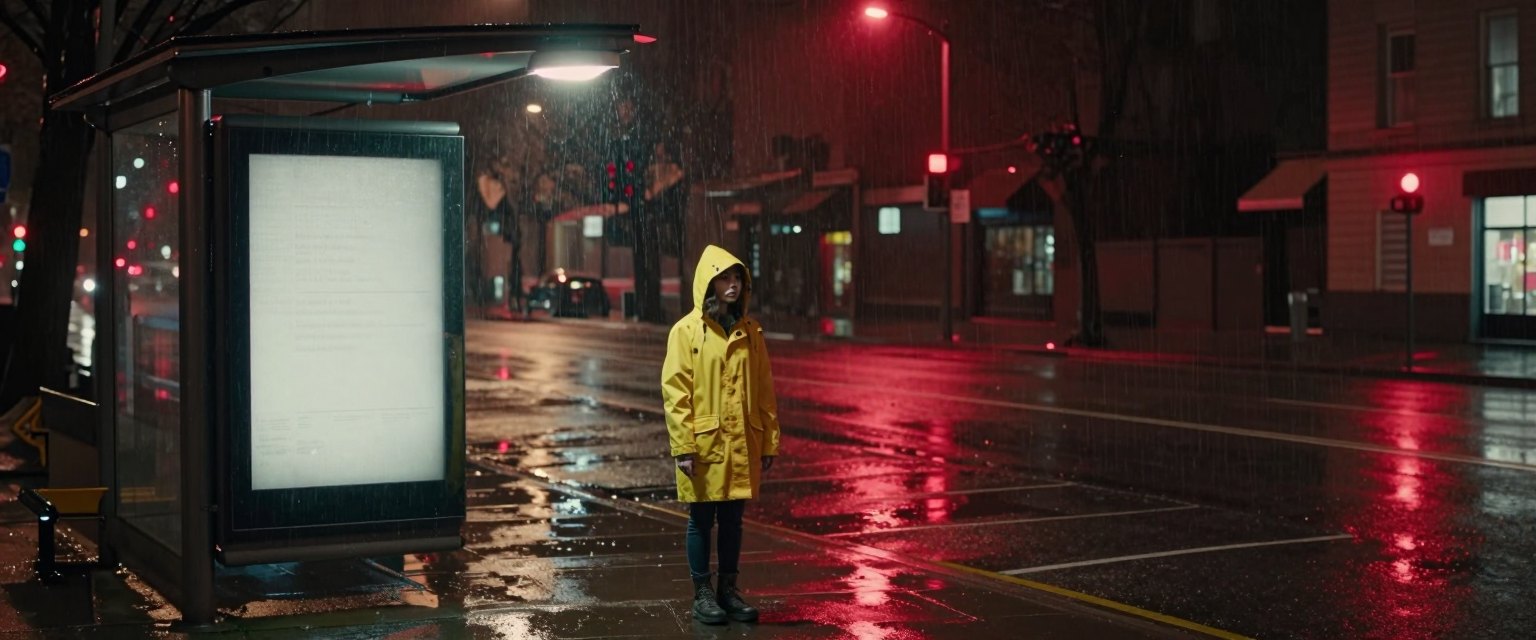
A wide-angle lens has a short focal length, so it captures a broad area of the scene. Objects close to the lens look larger than objects far away, which makes foreground and background feel stretched apart. Straight lines near the frame edges can bend slightly, and the space around the subject feels expansive. The effect is strongest when the camera sits close to a foreground element.
When to use it
A director picks a wide-angle lens to show a subject against a large environment, such as a city, a landscape, or a crowd, and to make the viewer feel the scale of the space. It also suits tense moments where a figure seems small and exposed within a vast setting. Close framing with a wide lens can make a character feel isolated or a physical movement feel more immediate.
How to prompt it
State the focal length in the prompt, such as 24mm, and pair it with a clear wide framing term like wide or extreme-wide so the model does not default to a tighter view. Describe what the viewer should notice in the environment, since the lens will emphasize the space around the subject. Models such as Veo, Kling, Sora, Runway and Wan respond well to explicit lens and framing words, though exact lens behavior varies by model.
60 examples in the library