
Fog and Haze
Fog and haze are atmospheric layers that soften distance, flatten contrast and hide the edges of objects.
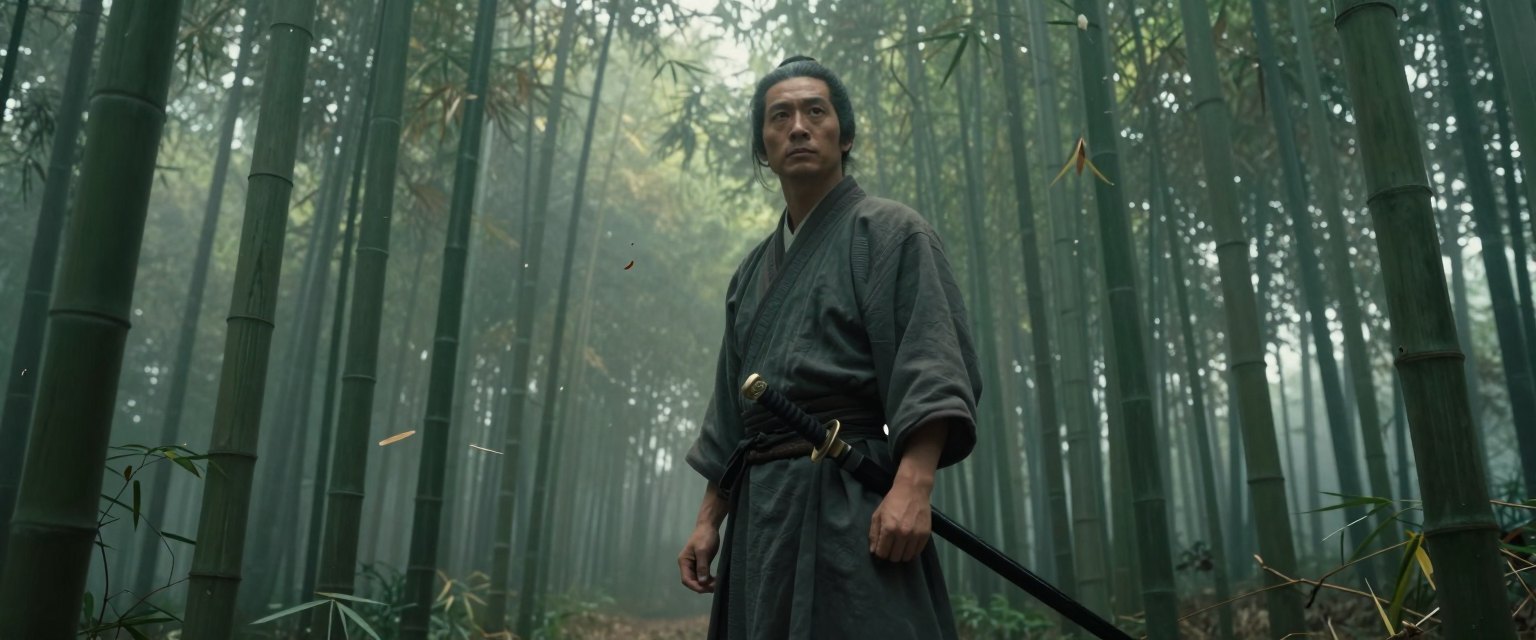
What it is
Fog and haze are a lighting and atmosphere choice in which a fine layer of water or particles sits between the camera and the subject. Distant objects lose contrast and blend into pale grey or white, while nearby objects stay sharper. The viewer sees less of the world, so the frame feels quieter and more uncertain. Light also scatters through the layer, which makes shadows soft and removes hard highlights.
When to use it
A director uses fog when the scene needs stillness, distance or a sense that something is hidden. It suits dawn and dusk, when low sun is already diffused, and it helps a landscape feel large but empty. It is also common when the story depends on what the viewer cannot see clearly, such as a figure approaching or a place that feels unfamiliar. Heavier fog can make a scene feel isolated, while thin haze keeps it calm.
How to prompt it
Name the atmosphere directly, for example "diffused fog" or "misty haze", and state the time of day, such as dawn, because models use time to set the colour and softness of the light. Describe what is visible and what fades, for example "pine silhouettes fading into mist", so the model knows where the depth falls off. Video models including Seedance, Kling, Veo, Sora, Runway and Wan tend to keep the haze stable across frames when you avoid adding wind or rain at the same time.
6 examples in the library


