
Screen Glow Lighting
Light cast onto faces and nearby surfaces by a screen that is the main source in an otherwise dark room.
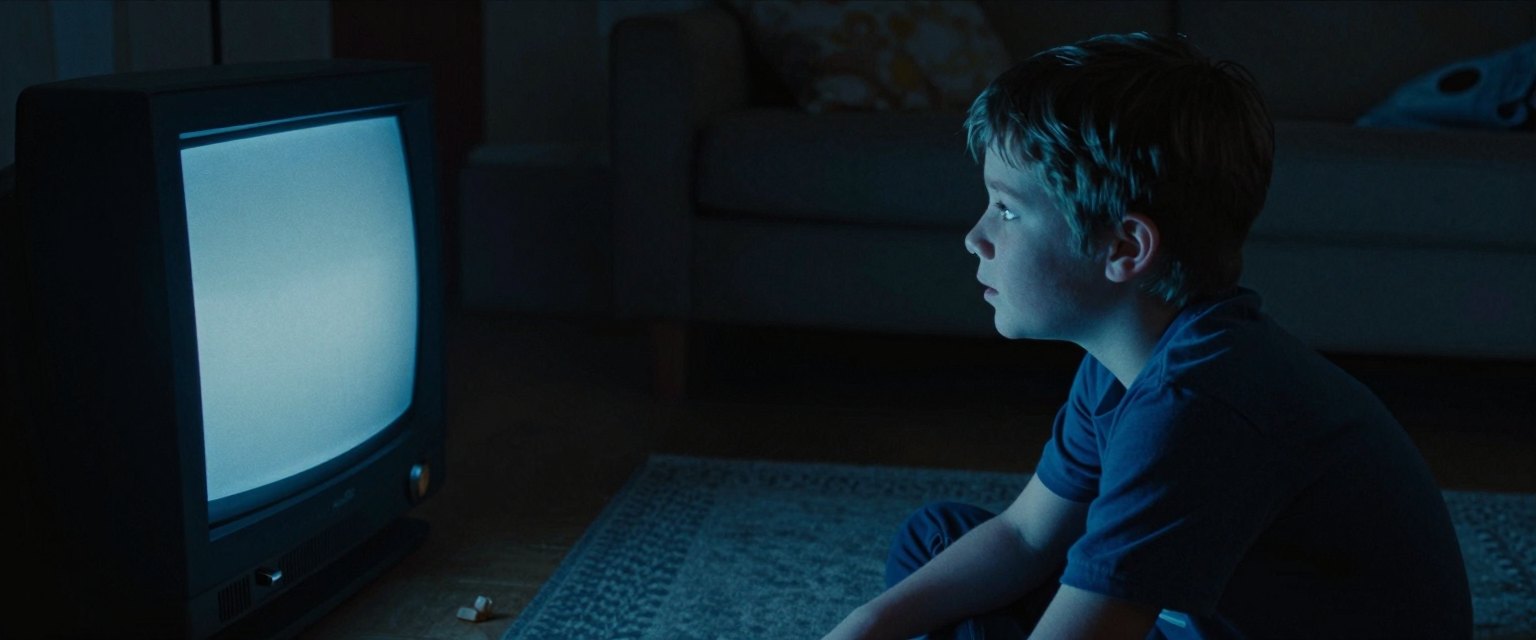
What it is
Screen glow lighting uses a display, such as a television, monitor or phone, as the key light in a scene. The screen throws colored light onto faces and the objects around them while the rest of the room stays dark. Because the light comes from whatever is playing, its color and brightness shift as the on-screen image changes, so the face reacts to the picture without the viewer seeing it. The effect makes the screen feel like a presence in the room.
When to use it
A director uses screen glow when a character is alone with a screen and the scene needs to feel private, quiet or uneasy. It suits moments of waiting, watching or reading something that changes the character. It also works well when the audience should share the character's view of the screen but not see the screen itself. The darkness around the glow keeps attention on the face.
How to prompt it
Name the light source and its color, for example blue tv glow or green monitor glow, and state that the room is otherwise dark. Add that the light shifts with the on-screen content so the model does not hold one flat tone. Models such as Seedance, Kling, Veo, Sora, Runway and Wan respond well when the lit area and the dark area are both described. Avoid writing only 'glowing', which often produces a generic bright scene.
4 examples in the library


