
Establishing Shot
A wide opening shot that shows where the scene takes place before anything else happens.
What it is
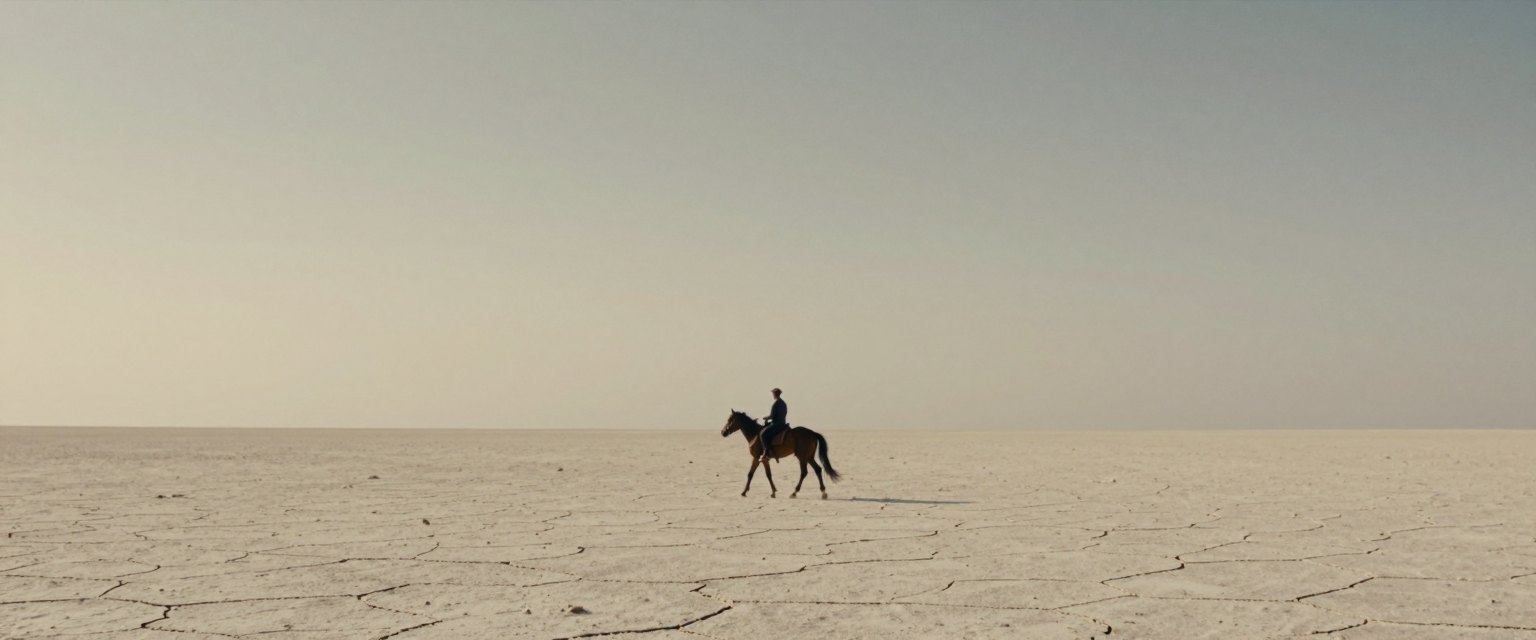
An establishing shot frames a full location so the viewer learns the setting, scale and mood before the story moves closer. The subject is usually small in the frame, with the environment doing most of the work. It is normally the first shot of a sequence and sets the reference for every closer shot that follows. A director uses it to answer where we are and how big the world is.
When to use it
Use it at the start of a scene, after a cut to a new place, or when geography matters to what comes next. It suits landscapes, cities, and any setting where scale or isolation carries meaning. Hold it long enough for the viewer to take in the space. Skip it when the audience already knows the location and the scene needs intimacy.
How to prompt it
Name the framing directly, such as extreme wide, and state where the figure sits in the frame. Describe concrete environmental detail (cracked salt flat, heat haze) so the model does not fill the space with generic scenery. Seedance, Kling and Veo respond well to a clear scale cue like a tiny figure against a large sky. Keep the camera move slow so the viewer can read the space.
13 examples in the library


