Hard Light
Light from a small or distant source that casts sharp-edged shadows and strong contrast.
What it is
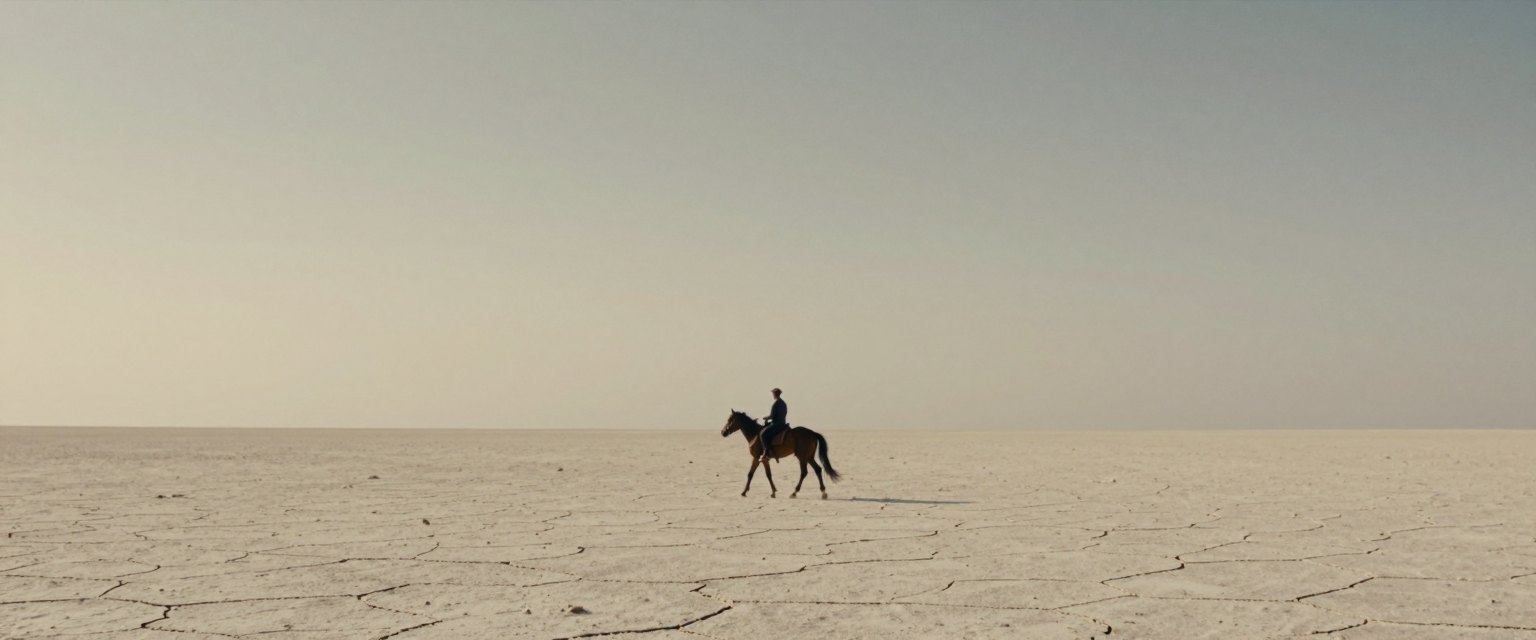
Hard light comes from a small or distant source, so it falls across the subject in a direct, unsoftened way. Shadows have crisp edges, highlights are bright and well defined, and the gap between light and dark is wide. Surface texture, edges and small details read clearly because nothing diffuses them.
When to use it
A director uses hard light to create tension, heat or grit. Midday sun on dry ground, a bare bulb, or a narrow beam cutting through blinds all produce it. It also suits moments where the subject needs to stand out sharply from a dark background.
How to prompt it
Name the light source, its direction and its edge quality, for example "hard side light from the left" or "harsh midday sun". Pair it with a dark or black background so the contrast is visible, and avoid soft-light words in the same prompt. Seedance, Kling, Veo, Sora, Runway and Wan all respond well to a clear light direction stated early in the prompt.
11 examples in the library