Night Exterior
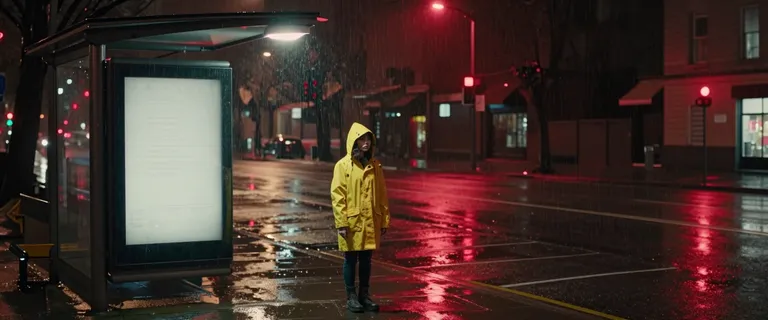
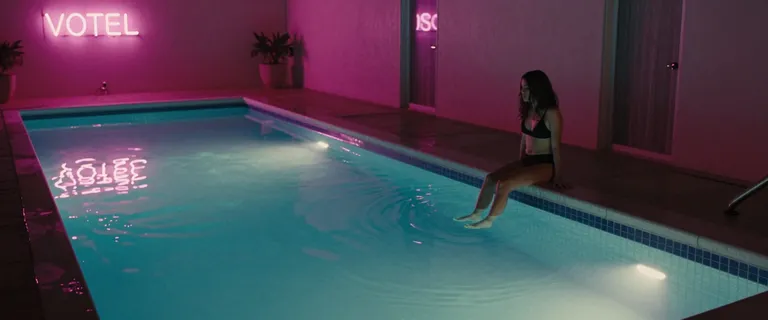
An exterior scene shot at night, lit mainly by visible sources such as street lamps, moonlight or signs.
What it is
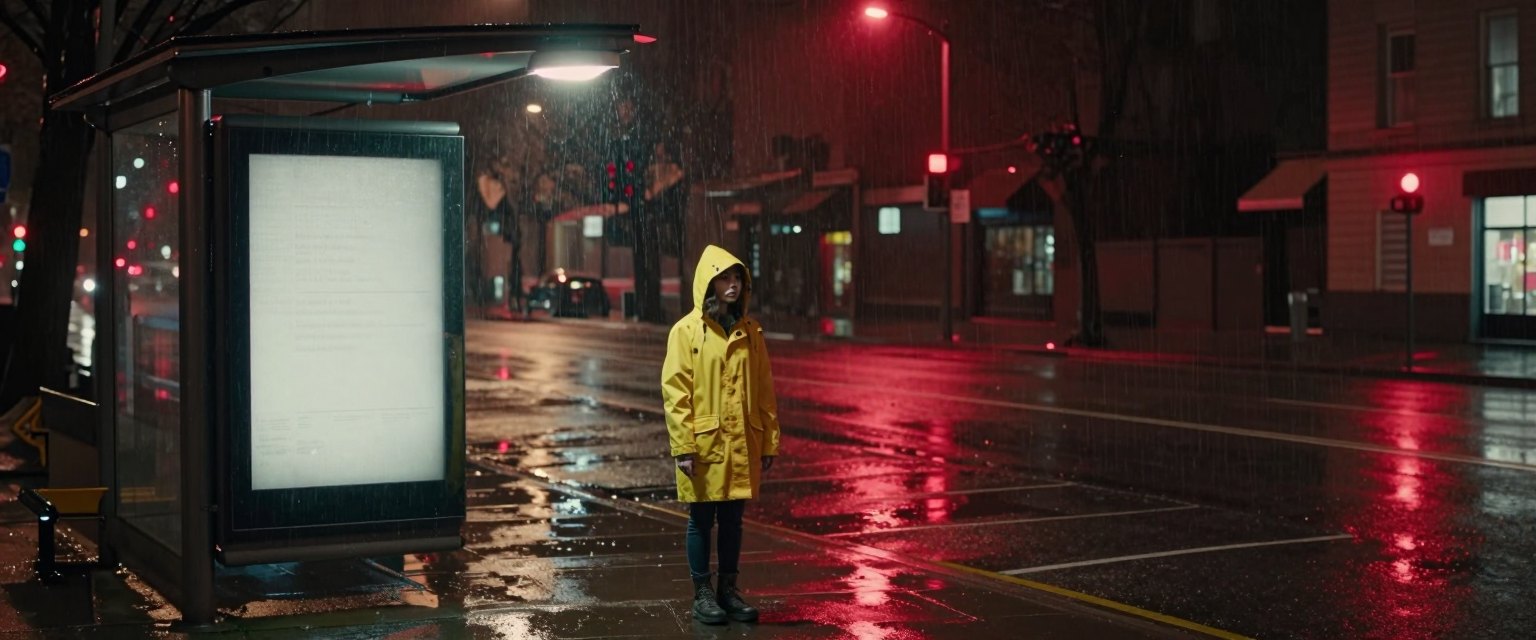
A night exterior is any outdoor shot where the story takes place after dark. The frame is mostly shadow, so the image depends on a few light sources to show the subject and the space around it. Those sources can be practical lights inside the scene, like street lamps, headlights or a window, or a soft natural source like moonlight. The viewer reads the light first and the setting second. Wet streets, fog and rain catch light and make the dark feel more present.
When to use it
A director chooses a night exterior when the event depends on darkness, such as a quiet waiting moment, a chase, or a mood of isolation. It also suits scenes where the setting should feel unfamiliar or unsafe, because unseen areas can hold threats. Night shots compress the world into a small lit area, which narrows what the viewer can know. Pairing a single warm light with a large dark field often makes a character look alone.
How to prompt it
State the time of day and name the light sources that are visible, for example 'night, lit only by a street lamp and headlights'. Models like Seedance, Kling, Veo, Sora, Runway and Wan handle dark scenes better when the prompt says where the light comes from and what stays in shadow. Avoid vague terms like 'dark' alone, because the model may fill the frame with noise or evenly lit detail. Add the weather or surface, such as wet pavement, to give the light something to reflect.
17 examples in the library